Each in our Own Time

Bamboo is a grass; its tubular cells grow in parallel columns, creating cylindrical stems that race toward the sun.
In the perfect climate and soil, some species of bamboo are said to grow three feet in one day. With over a thousand species, there are clumping and spreading varieties on all continents.
Bamboo rarely flowers, and when they do, all bamboo plants of the same species or “tribe” flower at once, regardless of their location, and then they die. Scientists are confounded by this behavior, and can only offer vague suggestions of why this is the case.
Bamboo plants are thus clones, grown from scions of mature plants, as bamboo seeds are exceedingly rare.
Although it is a grass, bamboo is used like wood in furniture, paper, eating utensils, and construction, and a field of large bamboo is not called a grassland but a “forest.”
I once had the pleasure of walking in a bamboo forest. Some friends and I were on Maui for a wedding. As is my habit, my daughter, our friend, and I stayed on the rainy side of the island, in the quiet of the jungle and abandoned black-sand beaches.
Our friends who were getting married left their posh Lahaina resort and ventured to the wild side for a day to visit the Seven Sacred Pools with us.
As we rode in their rented SUV over the winding one-lane Hana highway, we held our breath in fear of every corner and every car narrowly avoided. The friend who was driving suddenly shrieked, “Oh my god! I hit a mango!”
The entire car full of people burst into relieved laughter that the one thing she noticed about the crazy ride was running over one of the hundreds of mangoes falling from the trees onto the road.
The Seven Sacred Pools (Ohe’o Gulch) in Haleakala National Park is a series of pools, connected by small waterfalls, culminating at the top with the 400-foot cascade of Waimoku. The Pipiwai trail winds 2 miles through the lush jungle up the backside of a volcano to the falls.
My daughter and the newlyweds went up the trail quickly, eager to see the big waterfall at the end. I stayed behind to walk slowly with our friend, who struggled with a chronic immune disorder, making physical exertion difficult.
She finally said to me, “I am going to climb this damn thing no matter what, but I need to do it in my own time, and I don’t want you hanging back with me like I’m a burden. Go enjoy it at your own pace, and I’ll see you at the top.”
Free to wander and explore at my own pace, I reveled in the quiet solitude, ogling giant, stringy banyans with their hollow centers, once occupied by their host trees, now choked out by multitudes of dangling roots.
Occasional sheep and goats surprised me with their friendly bleating.
Cool outcroppings of black volcanic rocks drew me momentarily from the trail.
Nervous giggles escaped whenever I encountered a sign warning of the danger of flash floods in the area.
It was a sunny, dry day in Hawaii, and flooding seemed like the last thing that could happen. My child was running freely somewhere ahead without the slightest concern of being washed away by a sudden torrent.
It was an odd reminder that all we really have is the present moment, and that life can end in an instant.
The steep, rocky trail eventually leveled out and became a wooden boardwalk, meandering through a thicket of tall bamboo. I had never seen or heard of a bamboo forest before.
It was oddly peaceful with the green light reflecting off the stalks and filling the surrounding air, the slight swaying of the giant stems, and the gentle “clonking” as they bumped into one another.
I didn’t trip gleefully through this section of the trail as I had before. Instead, I stepped gingerly, as if trying not to awaken a sleeping baby, as I slowly let my senses take in the dense stand of bamboo.
It felt like a secret, magical place. I imagined my friend finding it on her way up the trail and felt a shiver of delight at the thought of the joyful discovery of the bamboo forest she would experience.
Young couples hurried past me.
Seeing me gaping at the bamboo in enraptured awe, a young man said, “It’s pretty cool, isn’t it?”
I whispered, “It’s wonderful. I love it.”
When the boardwalk ended, I stepped wistfully off, knowing this part of the journey was at an end, and breathed the deep breath of someone who has recently visited with God.
A few times as I hiked up the trail, my eleven-year-old daughter came whizzing past. She had run ahead to the waterfall and was jogging up and down the trail, checking in with the rest of our party and then back to wait at the end. Her energy, enthusiasm, and impatience were a sharp contrast to my quiet, peaceful stroll up the mountain.
Eventually, we each found our way to the waterfall at the top of the trail.
For some of us, it was a place to take photos and turn around.
For one, it was a place to climb on rocks and shout gleefully to her adults.
For others, it was a place to sit quietly in the sun, taking in the coolness of the water, the awe of the tumultuous falls, and the silliness of the bathing-suited tourists, venturing into the water.
That climb was 4 miles round-trip on steep, rocky terrain. My friend walked it very slowly up and down with her limited lung capacity. She received the healing magic of the seven sacred pools, a friend who let her be herself, and an energetic child running through a rainforest to check on her well-being. On Maui, her body relaxed. Her color increased. She started to thrive.
Back home in Oregon, we planned another outing to see a local nature preserve called “Basket Slough.” It was a true grassland with a trail up a gently sloping hillside where native birds could be viewed.
My daughter, our housemate, and I decided to climb it, and a family member of our friend joined us.
We were confused and dismayed that the family member kept fussing over our housemate as if she were a feeble invalid. She insisted that the woman sit on a bench and not make the walk all the way up the trail, even though she showed no signs of fatigue or distress. She glared angrily at me for even thinking it was within my friend’s power to walk more than a city block out in nature.
I looked to my friend, expecting her to stand up for herself, with the obstinacy I had seen sustain her on a volcano in Hawaii a month before. Instead, she smiled meekly and cuddled into the worried embrace of her family member, telling us to go ahead and leave her to rest.
I struggled with my judgment that this woman didn’t want to embrace life in the moment and thrive the way my daughter and I did. I thought she was abandoning her newfound wellness to get sympathy.
I see now that for her, embracing that moment meant leaning into the comfort of a worried family member, rather than traipsing up a grassy hillside, and that was meaningful to them just as having a joyful afternoon adventure together was meaningful to my daughter and me.
In the past, I often contemplated the difference between people I saw as living life to its fullest until the moment they died, versus those who were too absorbed in illness to engage with life or people.
Now, I see the judgments in these assumptions.
We are all living and dying in every moment, and everything we do as part of that process is our way of fully engaging to the best of our own ability right now.
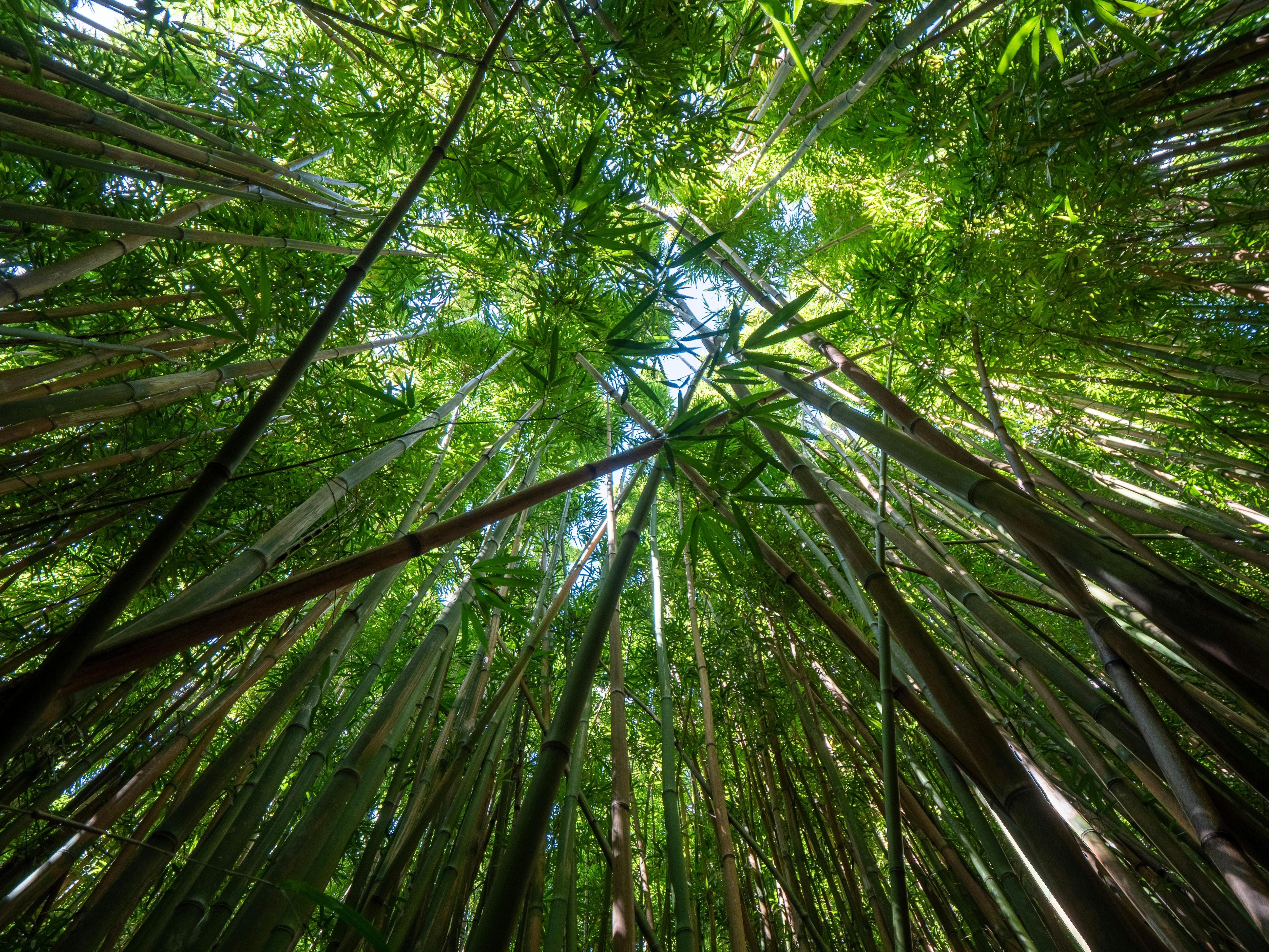
Photo by James Wheeler